Ayahuasca, the plants, and the songs.
What the family does in ceremony, in plain words, so you arrive knowing what the night will ask of you.
The brew.
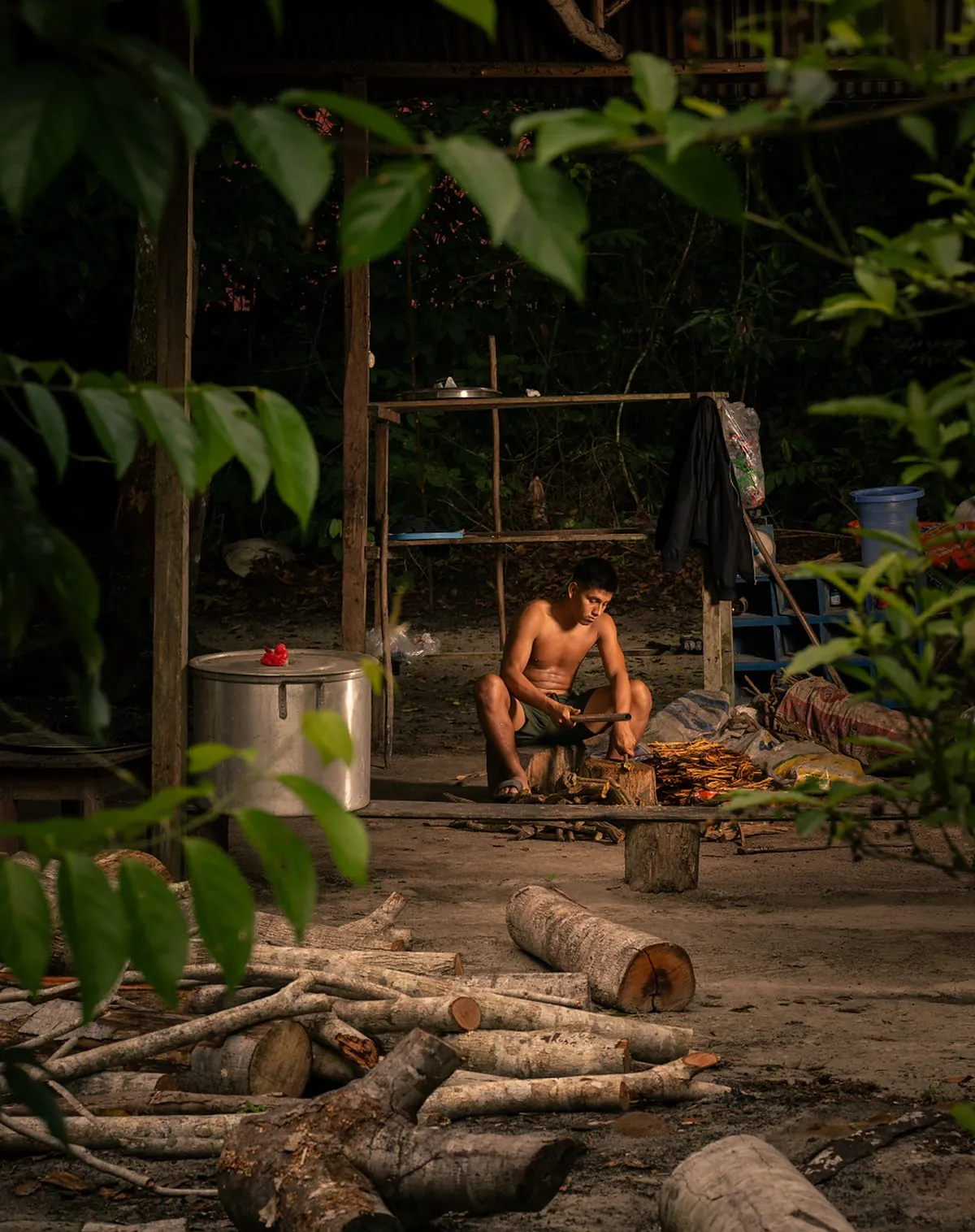
Ayahuasca is a tea cooked for many hours from two plants: the ayahuasca vine and the leaves of chacruna. Miguel and his family cook it themselves, over several days, from plants grown on their own land or gathered nearby.
Drinking it brings on several hours of strong effects: visions, emotion, memories, and very often purging (vomiting or diarrhoea), which the Shipibo understand as part of the cleaning. The effects fade by morning.
The medicine is strong and is not for everyone. Please read the preparation and safety page before you apply.
The songs are the medicine.
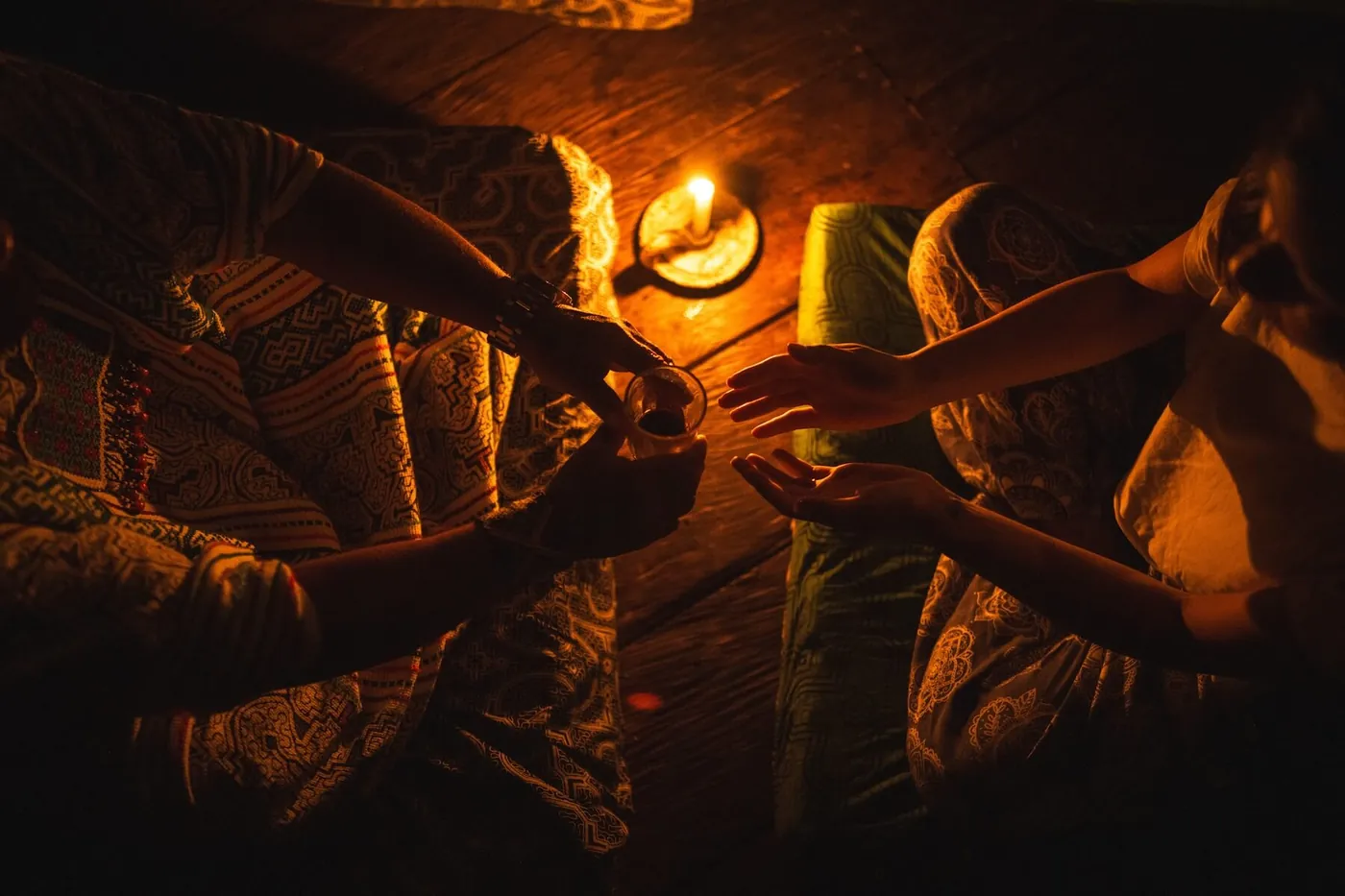
For the Shipibo, the healing is carried in the icaros, the songs the healers receive through their plant diets. In ceremony, Maestro Miguel sings to each guest in turn, sometimes for a long time, while the rest of the room sits in the dark.
You do not need to do anything during your song except stay with it. Many guests say the song is the part of the night they remember most.
Learning from one plant at a time.
A dieta is the heart of Shipibo training and of deeper healing. For a set number of days you eat very simply (no salt, sugar, oil, pork, alcohol or spice), keep to yourself, and take one teacher plant prescribed by the elder. The plant is said to teach in dreams and in ceremony.
At Kanan Biri, short dietas are part of the 11-day retreat. A one-month dieta is also offered; see Retreats.
Plants the family works with
Maestro Miguel prescribes one plant for each dieta, chosen for the person in front of him.
Ojé · Piñón blanco · Bobinsana · Tamamuri · Chiric sanango · Coca · Ajo sacha · Shihuahuaco · Marosa · Ayahuma · Oración · Mapacho · Chacruna
Plant baths and vapour baths
Most mornings begin with a bath of scented plants prepared by Miguel's family. They clean the body and, the family says, the spirit.
The designs you will see everywhere.
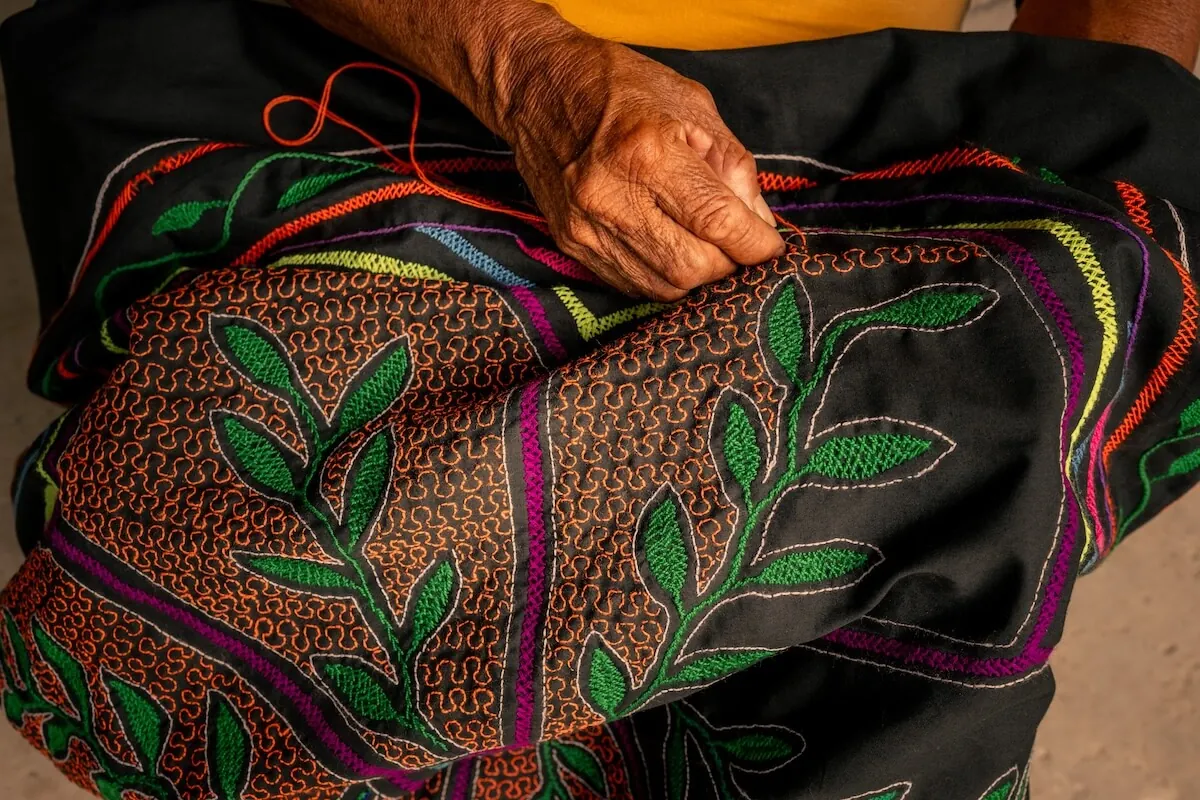
Kené are the Shipibo designs: painted on cloth, ceramics and skin, carved into wood, and embroidered on cloth, where they are called kewé. The craft is traditionally passed down among women, and Maestro Miguel embroiders them too. Many designs are said to come from dreams, master plant diets and ceremony.
What happens, hour by hour.
A typical night. The elder may change the rhythm for a given group.